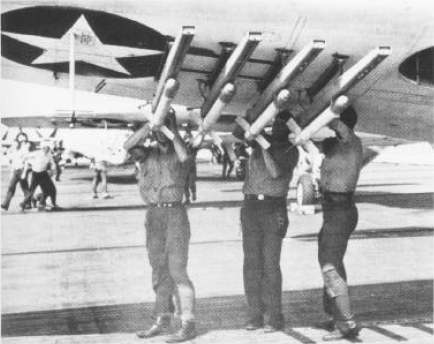
World War II Small Arms Quiz 1. The German 7.92×33mm Kurz round, used in the StG 44, was designed to: Replace pistol ammunition for submachine guns Increase armor penetration at long range Reduce weapon recoil in sniper rifles Provide controllable automatic fire at intermediate ranges 2. Aerial rockets such as the British RP-3 and American HVAR were primarily used for: Airfield illumination Air-to-air dogfighting Suppressing infantry formations Attacking armored vehicles and ships 3. In the German Wehrmacht infantry squad organization, what was considered the primary weapon around which the squad was built? Panzerfaust MG34 or MG42 machine gun Kar98k rifle MP40 submachine gun 4. The U.S. “Norden bombsight,” while not a weapon itself, enabled what crucial capability? High-altitude precision bombing Radar-guided artillery fire Precision naval gunfire Early heat detection of aircraft 5. The British PIAT anti-tank weapon operated using which principle? Spring-loaded spigot mortar Rocket propulsion Recoilless venting Gas-operated piston 6. What was the effective range of most WWII-era bolt-action infantry rifles such as the Kar98k or Lee-Enfield when aimed fire was expected? 300–500 meters 100 meters 800–1,000 meters 1,500 meters 7. One of the most unusual Soviet weapons of WWII, the “Ampulomet,” fired what type of projectile? Molotov-style incendiary glass spheres Shaped-charge rockets High explosive fragmentation shells Needle-like flechette bundles 8. Which country experimented with explosive rifle grenades using picric acid-based fillings, despite stability issues? France Japan Italy Germany 9. The U.S. Navy’s Bat glide bomb differed from German designs by incorporating: Wire-controlled steering Passive radar homing for autonomous targeting Acoustic proximity fuses Infrared guidance 10. What explosive filling did the Germans commonly use in large-caliber artillery shells due to shortages of TNT? Amatol HMX RDX Nitrocellulose slurry You’ve reached the end of the quiz! Submit Quiz ❮ ❯